For more information, a proper way to tune meth injection without using sencondary rail is to use standalone with extra input that can trigger different map (let's say, NOS map). You'll have two different map one tuned just for pump gas, and the other one tuned with methanol. Depending on EMS, you can set different boost, timing, and or fuel on each map. Now, fail safe, line pressure sensor, or flow meter (varies from different meth kits) will tell EMS if the meth system is working or not, and the EMS will switch the map according to these readings. That way you can minimize the chance of blowing your engine from meth system failure.
Basic "meth" injection kits don't have a lot of these features which make it safe. Most of meth system, only controll the pump, which means the whole meth line can be emptied from manifold vacuum. This causes "methanol delay" which means the car will run lean untill the meth line is once again pressurized. Meth delay can cause serious engine damage. This happens worse on trunk mounted tank setups
For that reason, a good meth system will come with a "check valve" that stops the meth from getting sucked in from manifold vacuum, or a "solenoid" using constant line pressure.
Here's a dyno comparison between pump gas and meth tune from a fully built KA24DE with gt35r, AEM meth kit, and megasquirt. (Fail safe was done through EBC w/ relay)
The pumpgas tune was fully setup to the knock threshold just before detonation occured.
(Most of 4 cylinder engine will push less than 300whp at the wheel on our dyno with 94 oct.)
Run 1 : pump gas (Solid line)
Run 2 : Meth (Dashed line)
Red : horsepower
Blue : Torque
Green : Boost
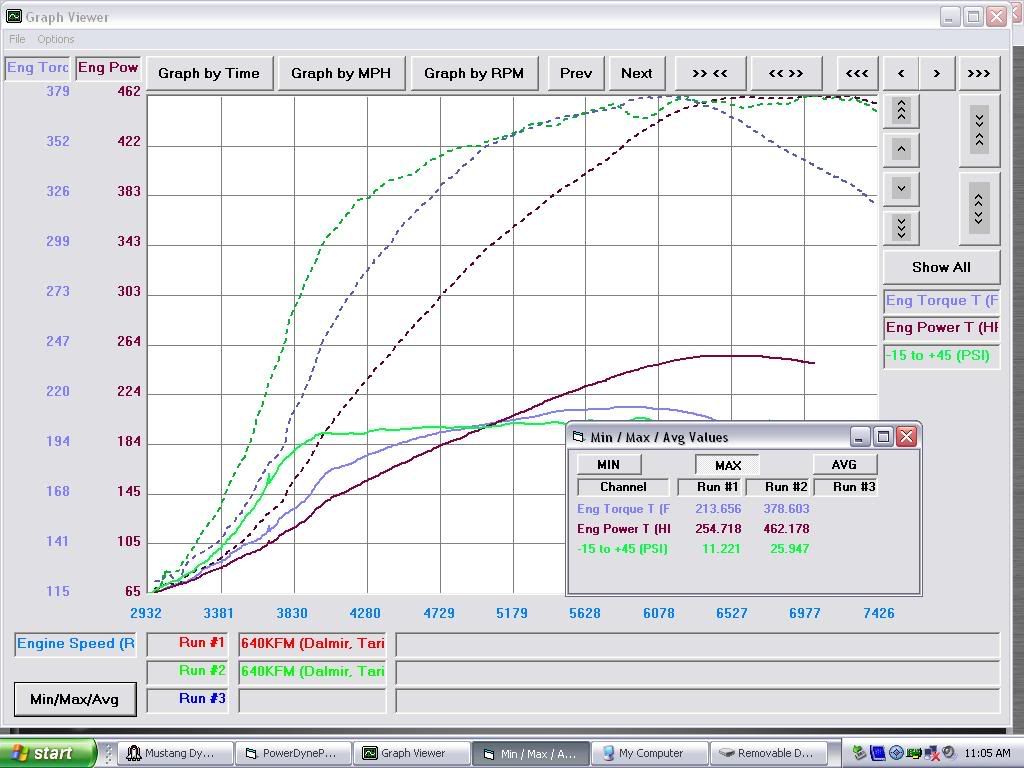
That's close to 108 whp gain (about 140 crank hp)and the meth tune wasn't pushed as far as it could have been either.
(Our mustang dyno reads about 25% off the crank hp, and reads 10 to 15% lower than dyno jet dynos, or any other dyno that runs a "correction factor" to match other dyno numbers.)